
Horse Gut Health Supplement: How to Choose One That Earns Its Place in the Feed Room
A horse gut health supplement only earns its keep if you know exactly what job it’s doing. Most Australian horses live a fair way from the life their digestive system was built for, which was near-constant grazing, steady movement and not much stress. What they get instead is stabling, hard feed, float trips, training loads and feed changes, and the gut wears the consequences of all of it. The right supplement helps close that gap. The wrong one is expensive dust on top of the chaff.
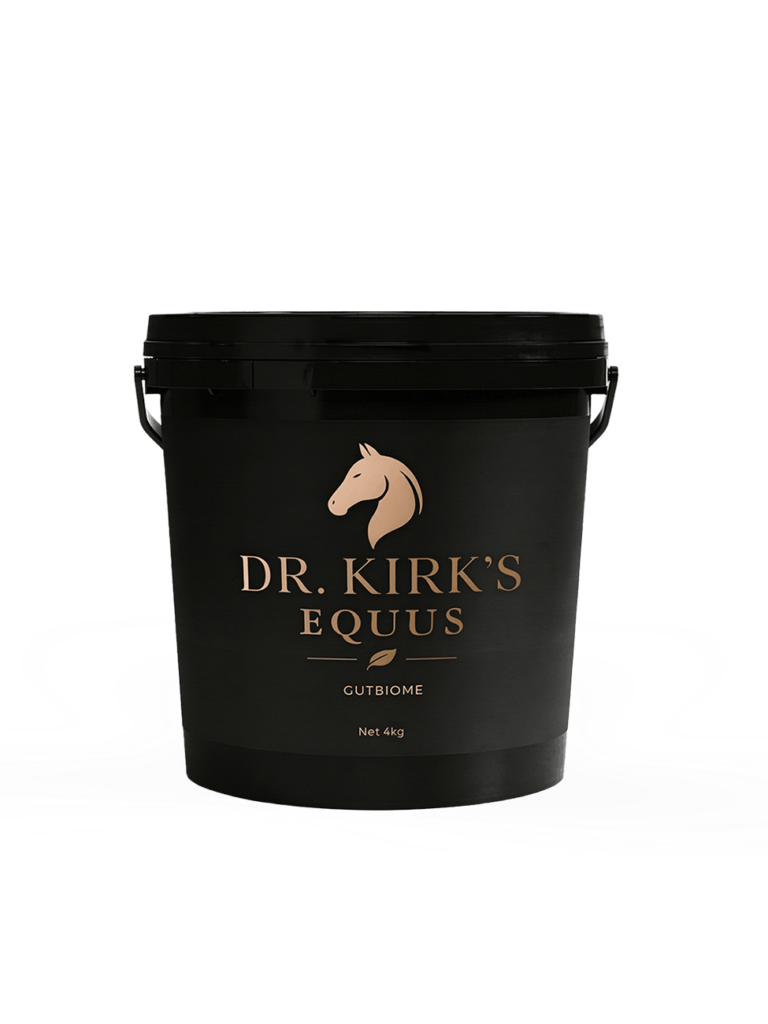
That’s the thinking behind Dr. Kirk’s Equus. We’re an Australian family brand that’s been around horses since the 1970s, and our Gut Biome formula was developed with experienced equine nutrition formulators to do one clear job: support digestive consistency in real-world horses. It’s FeedSafe® accredited, formulated and made in Australia, and every ingredient and inclusion rate is printed on the label. No mystery blends, no miracle-bucket promises.
This guide covers what a horse gut health supplement should actually contain, how to tell genuine formulation from clever marketing, and how to feed one properly once you’ve made your choice.
What a Horse Gut Health Supplement Actually Does
A well-built horse gut health supplement supports the digestive systems your horse already relies on every day. In practice, that means backing the microbial population in the hindgut as it ferments fibre, supporting digestive efficiency through the stomach and small intestine, and rounding it out with nutrients that support gut resilience and nutrient utilisation.
Notice the word doing the heavy lifting there: support. A horse gut health supplement is nutrition, not medicine. It doesn’t diagnose, treat or cure ulcers, colic or any other condition, and a product implying it does deserves a hard look. What good daily gut support can do is help your horse get more out of the feed you’re already paying for, and help the digestive system cope with the pressures modern management puts on it.
Why Modern Feeding Puts Pressure on the Equine Gut
Horses evolved to trickle-feed. Sixteen or more hours a day of grazing, constant slow movement, small amounts of fibrous forage going in almost around the clock. Very few horses live that way now. Meal feeding, higher-starch hard feeds, stabling, travel, competition nerves, new agistment, seasonal pasture swings, coming back into work after a spell. Every one of those shifts asks the gut to adapt.
The hindgut’s microbial population is particularly sensitive to sudden change. Abrupt feed transitions and stress can unsettle the balance those microbes depend on, and when fibre fermentation struggles, condition, droppings and attitude often tell the story before anything else does. That’s the gap a properly formulated horse gut health supplement is designed to help fill: steady, daily nutritional support for a system under modern pressure.
What to Look For in a Horse Gut Health Supplement
Plenty of tubs compete for the same spot on your feed-room shelf, and every one of them claims to be the horse gut health supplement your horse needs. Here’s how to sort them:
Named ingredients with real inclusion rates. If the label hides behind a “proprietary digestive blend”, walk away. You should be able to see exactly what’s in the tub, how much of it there is, and ideally where it’s sourced from.
Rates that make nutritional sense. A token sprinkle of a good ingredient is label decoration, not formulation. The inclusion rate has to be high enough to plausibly do its job at the recommended daily feed.
More than one pathway. Gut function isn’t a single lever. Look for a horse gut health supplement that combines microbial support, digestive efficiency, buffering support and a binding layer against everyday feed contaminants, rather than betting everything on one hero ingredient.
Clear directions by horse size. A small pony and a large warmblood shouldn’t be fed the same amount. Good products say so plainly, in grams, with a scoop that matches.
Local manufacture and accreditation. Formulated and made in Australia under FeedSafe® accreditation means the product is produced to a recognised Australian stockfeed standard. That’s worth more than any adjective on the front of the pack.
Ingredients That Belong in a Horse Gut Health Supplement
Once you know the categories, labels get much easier to read. These are the ingredient types worth looking for in any horse gut health supplement, and the job each one is there to do:
Yeast culture. Fermentation metabolites from yeast culture support the fibre-digesting microbes in the hindgut, the engine room of equine digestion.
Probiotics, digestive enzymes and active dry yeast. These support digestive efficiency, helping the horse make better use of what’s already in the feed bin.
Prebiotics such as MOS and beta-glucans. Yeast-derived MOS and beta-glucans support a healthy microbial balance through the gut.
Calcareous marine algae. A natural source of buffering support, useful in a digestive system regularly asked to handle hard feed.
A mycotoxin binder. Pasture, hay and grain aren’t sterile. A binder adds a practical binding layer against the mycotoxins that can turn up in everyday feed.
Antioxidant support. Natural vitamin E and selenium yeast back the gut’s daily workload with antioxidant support.
No single ingredient makes a formula. It’s the combination, at honest rates, that separates a real horse gut health supplement from a bag of good intentions.
Inside Gut Biome: A Horse Gut Health Supplement Built for Real Horses
Gut Biome is Dr. Kirk’s Equus’ answer to everything above, and the label does the talking. Per 100 g as fed, it delivers:
- Calcareous marine algae – 50,000 mg (source: Lothar)
- Mycotoxin binder – 10,000 mg (source: Elitox)
- Yeast culture – 7,000 mg (source: Diamond V XPC Ultra)
- Yeast + MOS + beta-glucans – 2,000 mg (source: Celmanax)
- Probiotics, digestive enzymes and active dry yeast – 2,000 mg (source: BioPro)
- Vitamin E (natural) – 1,000 mg (source: Vitamin E-250, 25% natural)
- Selenium yeast – 1 mg (source: Sel-Saf 3000)
- Apple flavouring for palatability, on a lucerne meal carrier
Every source is named because transparency is the whole point. The formula covers the pathways that matter: microbial support, digestive efficiency, natural buffering, a mycotoxin-binding layer and antioxidant backup, at inclusion rates chosen to work rather than decorate a label. It’s formulated and made in Australia, FeedSafe® accredited, and a 4 kg tub lasts an average horse around 40 days at the standard 100 g daily feed.
See the full Gut Biome label, feeding guide and ingredient breakdown on the product page: https://drkirks.com.au/product/gut-biome/
How to Feed a Horse Gut Health Supplement Properly
Even the best horse gut health supplement will underdeliver if it’s fed carelessly. The feed-room basics:
Introduce it gradually over 7–10 days. The gut prefers slow change, and that applies to supplements just as much as new hay.
Mix it with a forage-based feed. Chaff, beet pulp or soaked hay pellets carry a powder well. Moisten the feed lightly if powder loss is a problem.
Feed at a consistent time each day. Consistency is half the value.
Split the daily amount during stressful periods. Through travel, competition or feed transitions, dividing the dose across two or three feeds mimics grazing and keeps support continuous.
Always provide clean, fresh water. No supplement replaces water and forage. They’re the foundation everything else sits on.
Gut Biome’s rates are 50–75 g daily for a small pony, 100 g for an average horse and 125–150 g for a large warmblood, with one level scoop measuring 50 g. Feed a horse gut health supplement the same way you’d feed anything else that matters: measured, consistent, unhurried.
How to Judge Whether It’s Earning Its Place
Don’t judge a daily feed product on three scoops, and don’t change four other things in the same fortnight. Give it several weeks of consistent feeding, hold the rest of the ration as steady as you can, and watch a few honest markers instead of relying on memory and hope:
Feed intake and routine. Is the horse cleaning up the ration consistently, at home and away?
Droppings. You’re watching for your horse’s normal pattern holding through changes, not chasing a perfect pile. Persistent change belongs with the vet, not the diary.
Condition and work. Track body condition, willingness and recovery alongside the whole feeding program, not in isolation.
Practical fit. A horse gut health supplement only works if it’s simple enough to feed every single day and the horse eats it without a battle.
It’s not a clinical trial in a feed shed. It’s just a better basis for the decision than a vague feeling either way.
Common Mistakes When Choosing a Horse Gut Health Supplement
We’ve watched plenty of feed-room experiments over the years. The usual missteps:
- Buying the biggest claim. “Fixes everything in five days” isn’t formulation, it’s marketing. There’s no such thing as a miracle bucket.
- Ignoring inclusion rates. Two horse gut health supplements can list identical ingredients at wildly different amounts. Read the numbers, not just the names.
- Doubling up. Feeding two yeast, probiotic or binder-based products at once rarely adds value. Keep the program sensible.
- Quitting after a week. A horse gut health supplement works through daily consistency. Judge it over weeks, not days.
- Using it to paper over a poor diet. If forage, water or feed hygiene are wrong, fix those first. A supplement supports a good program; it doesn’t rescue a bad one.
When It’s a Vet Problem, Not a Feed-Room Problem
Some things a supplement should never be asked to handle. Unexplained weight loss, recurrent diarrhoea, signs of colic, blood in the droppings, going off feed or a sudden change in behaviour are veterinary conversations, and they’re worth having early. A horse gut health supplement supports normal digestive function in a healthy horse. It isn’t a diagnosis or a treatment, and we’d rather tell you that plainly than sell you a tub you shouldn’t be relying on.
Frequently Asked Questions About Horse Gut Health Supplements
How long before I notice a difference from a horse gut health supplement?
Introduce it gradually over 7–10 days, then give it several weeks of consistent daily feeding before judging. Gut support builds through routine rather than flipping a switch, and every horse responds on its own timeline.
Does a horse on good pasture still need a horse gut health supplement?
Quality forage is the best gut support there is. Where a supplement earns its place is through change and pressure: travel, stabling, hard feed, competition and feed transitions, when even a well-managed horse’s digestive system is asked to adapt.
Can I feed a horse gut health supplement alongside other supplements?
Generally yes, but keep the overall program sensible. Avoid doubling up on yeast, probiotic or mycotoxin-binder products across different tubs, and follow each label’s feeding rate.
Is Gut Biome suitable for competition horses?
Gut Biome uses standard nutritional ingredients and is not intentionally formulated with prohibited-list substances. Rules differ between governing bodies and change over time, though, so check the regulations that apply to your sport and your horse’s complete feeding program before competing. Our FAQ page covers this in more detail.
How much should I feed a pony versus a warmblood?
As with any horse gut health supplement, feed to bodyweight per the label. Gut Biome’s guide is 50–75 g daily for a small pony, 100 g for an average horse and 125–150 g for a large warmblood, with one level scoop holding 50 g.
The Feed-Room Test
Choosing well comes down to three questions. Are the ingredients named? Are the rates honest? And does the company tell you plainly what the product won’t do? Dr. Kirk’s Equus was built on a simple idea, that a horse doesn’t care about your brand, only your standard, and Gut Biome is that standard in a 4 kg tub. If your horse’s routine includes hard feed, travel, training or change, order Gut Biome direct from Dr. Kirk’s Equus and give your horse a horse gut health supplement that’s built to hold up in the feed room, day after day.
SOURCES & FURTHER READING
These references support the general educational sections only. Product composition, feeding rates, directions and claims follow the current approved Gut Biome label and product page, not third-party sources.
- Rutgers NJAES Bulletin E375 (the equine microbiome and hindgut fermentation): https://njaes.rutgers.edu/e375/
- Boucher et al. 2024, Current Understanding of Equine Gut Dysbiosis and Microbiota Manipulation Techniques (Animals): https://pmc.ncbi.nlm.nih.gov/articles/PMC10931082/
- Dr. Kirk’s Equus Gut Biome product page: https://drkirks.com.au/product/gut-biome/
- FeedSafe: the review pass suggested feedsafe.com.au/feedsafe-manuals-and-guides, which could not be verified live